

James 4:13-17
Go to now, ye that say, To day or to morrow we will go into such a city, and continue there a year, and buy and sell, and get gain:
Whereas ye know not what shall be on the morrow. For what is your life? It is even a vapour, that appeareth for a little time, and then vanisheth away.
For that ye ought to say, If the Lord will, we shall live, and do this, or that.
But now ye rejoice in your boastings: all such rejoicing is evil.
Therefore to him that knoweth to do good, and
doeth it not,
to him it is sin.
How are we to obey? Well, in my family we had a saying, that obedience was
To immediately and cheerfully carry out the expressed and unexpressed wishes of those in authority over you.
This post is going to focus on the idea of ‘immediately’. That every second of non-obedience is a form of ‘disobedience’. That when we have a form of good in front of us, and we do not do it… now… we are not doing it.
Don’t Like the Phrase
Matthew 21:28-32
But what think ye? A certain man had two sons; and he came to the first, and said, Son, go work to day in my vineyard.
He answered and said, I will not: but afterward he repented, and went.
And he came to the second, and said likewise. And he answered and said, I go, sir: and went not.
Whether of them twain did the will of his father? They say unto him, The first. Jesus saith unto them, Verily I say unto you, That the publicans and the harlots go into the kingdom of God before you.
For John came unto you in the way of righteousness, and ye believed him not: but the publicans and the harlots believed him: and ye, when ye had seen it, repented not afterward, that ye might believe him.
The idea for this post came from a note that appeared in my SS feed:
Now in the end she came around to saying that she thought it was better to say ‘delayed obedience’. Which, I haven’t yet pointed out, the phrase does. I mean… she even quoted it. The phrase, fully translated, says, “One of the forms of disobedience is called ‘delayed obedience’.” I ended up replying (we’ll see if the conversation continues) thusly:
I think perhaps you misunderstand the phrase. Speaking as someone who has heard it over the last 63 years or so, what it is meant to express is this:
1) The child who says “I will”… and does not do… is not obeying. It may be that they will obey in the future, but they are not obeying right now. They are, right now, in a state of disobedience.
2) The parent (and this was actually the focus of the saying) who has asked their child to do something (or stop doing something) several times (or with the I’ll count to three habit) needs to realise that the child is already disobedient. They need to punish based on the current action, not the future hope.
So in this parable Christ was describing two groups of disobedient people:
a) The sinners. People who were prostitutes, thieves, tax collectors (an occupation at that time which involved extortion), etc.
b) The Pharisees. People who pretended to be righteous, but in reality where thieves and adulterers… just in a fancier way.
So the beginning of the story involves two groups of disobedient people.. one group who acknowledged their disobedience, and another who pretended to be obedient.
And then, when John and then Christ came preaching repentance, one of those groups repented and turned from their wicked ways. Of those two disobedient groups one became obedient.
Which is literally the focus of the ‘delayed obedience’ saying, only in a far more dramatic way. Both groups were disobedient… one became obedient. Before John came… both were in active disobedience.
So the parent who is sitting their thinking that they have an obedient child because, eventually, they get them to do some of what they asked… is deceiving themselves.
But what I wish to get to in this post is all of the other Scripture passages which speak to this subject.
Early in the Morning
Genesis 22:1-3
And it came to pass after these things, that God did tempt Abraham, and said unto him, Abraham: and he said, Behold, here I am.
And he said, Take now thy son, thine only son Isaac, whom thou lovest, and get thee into the land of Moriah; and offer him there for a burnt offering upon one of the mountains which I will tell thee of.
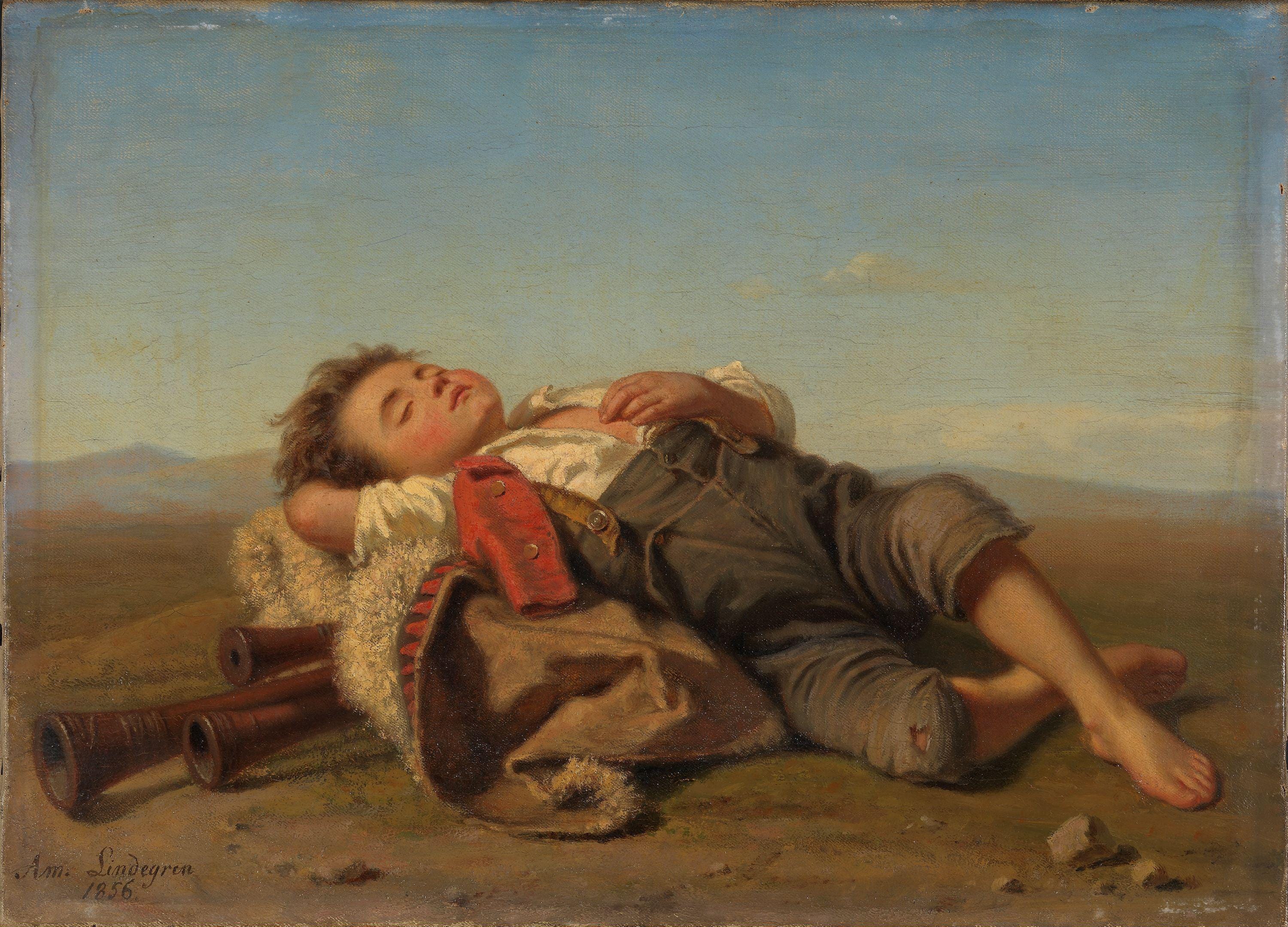
And Abraham rose up early in the morning, and saddled his ass, and took two of his young men with him, and Isaac his son, and clave the wood for the burnt offering, and rose up, and went unto the place of which God had told him.
One phrase that should come to mind immediately is the phrase ‘early in the morning’. I always associate that phrase with Abraham, particularly this passage. Abraham, when given about the hardest command God could give, got up ‘early in the morning’ to carry it out.

The Timing of the Thing
Genesis 17:9-14
And God said unto Abraham, Thou shalt keep my covenant therefore, thou, and thy seed after thee in their generations.
This is my covenant, which ye shall keep, between me and you and thy seed after thee; Every man child among you shall be circumcised.
And ye shall circumcise the flesh of your foreskin; and it shall be a token of the covenant betwixt me and you.
And he that is eight days old shall be circumcised among you, every man child in your generations, he that is born in the house, or bought with money of any stranger, which is not of thy seed.
He that is born in thy house, and he that is bought with thy money, must needs be circumcised: and my covenant shall be in your flesh for an everlasting covenant.
And the uncircumcised man child whose flesh of his foreskin is not circumcised, that soul shall be cut off from his people; he hath broken my covenant.
There are times when you see a possible objection and you say to yourself, “Surely, no one could actually say…”. And, all to often, you are proven wrong. So I wish to cut off a possible objection at the pass and say… “Not all immediate obedience is obedience”. Or, perhaps, “Timing matters”.
We see in this passage God giving Abraham a command… to circumcise the males of his house. Himself, his son, his male slaves, and their male children. All of them.
But buried in that command… is a time. The newborn male is not to be waited for, knife in hand. He is to be circumcised… on the eighth day. Similarly when other commands are given, they involve times. Sometimes explicitly, sometimes implicitly. When told to attack a given people or city, the Godly general or king does not rush out of his tent half naked… he prepares, gathers his weapons and his people, calculations his logistic needs… and then begins the march.
The point being that all of that is part of the obedience. The child who, told to mow the lawn, gets a drink or uses the potty first may be doing so in complete obedience… he doesn’t want to have to stop the mower to pee, and knows that its hot outside and the lawn won’t get mowed if he is collapsed with heat exhaustion.
So sometimes the end result of obedience takes a while. But that is a far cry from the ‘delay’ talked about in this phrase.

The Will is the Point
John 5:30
I can of mine own self do nothing: as I hear, I judge: and
my judgment is just; because
I seek not mine own will, but
the will of the Father which hath sent me.
The real issue at hand in the definition of obedience is that of ‘the will’. All too often we end up thinking that the goal of obedience is to obey the letter of the law, the exact words of those in authority. A great deal of comedy, especially in British Schoolboy humour, has to do with someone telling the ‘exact truth’… ie using the words of the authority to twist the meaning and desire of those in authority
This should be the opposite of how we should view the concept of obedience. To be obedient is to do the will of those in authority over us. Thus they young man peeing and getting a drink could do so in full confidence that that was what the parent wanted. The soldier gathering the supplies for the attack could, assuming he understands the plan, do so in full confidence that what was what his general wanted him to do.
Indeed obedience often involves long delays for planning, for study, for gathering materials, etc. If I get called to a job site, and ‘delay’ my arrival by stopping at a gas station for fuel… I am being fully obedient and helpful. If I stop for a pizza and a coke… maybe not :)
The only time a ‘rush job’ is obedience… is when a ‘rush job’ is the will of the authority. Sometimes, in medicine, right now means life, better later means dead. But not always. Sometimes, in battle, ‘attack’ means ‘even in your underwear’. Most times, it means, “Do the thing right, with the right tools, at the right time, in the right way.”
But every time obedience means ‘doing the will of those in authority over you’.
Conclusion
Proverbs 22:6
Train up a child in the way he should go: and
when he is old,
he will not depart from it.
The point of the useful parenting phrase ‘delayed obedience is no obedience’ is to help parents train their children. And, to a lesser degree, help pastors prepare their sermons. The parent must see that they stand in the place of God, and that they obedience that they teach applies to them will, in the end, be given to God. And that obedience means doing the will of the authority. Which means… not delaying.

Thank you for reading Von’s Substack. I would love it if you commented! I love hearing from readers, especially critical comments. I would love to start more letter exchanges, so if there’s a subject you’re interested in, get writing and tag me!
Being ‘restacked’ and mentioned in ‘notes’ is very important for lesser-known stacks so… feel free! I’m semi-retired and write as a ministry (and for fun) so you don’t need to feel guilty you aren’t paying for anything, but if you enjoy my writing (even if you dramatically disagree with it), then restack, please! Or mention me in one of your own posts.
If I don’t write you back it is almost certain that I didn’t see it, so please feel free to comment and link to your post. Or if you just think I would be interested in your post!
If you get lost, check out my ‘Table of Contents’ which I try to keep up to date.
Thanks again, God Bless, Soli Deo gloria,
Von